
Performance marketing is changing how businesses grow online. If you want to know how to learn performance marketing, the right skills and practical approach can help you build a successful digital career faster.
From running paid ads to generating real sales, companies today rely on data-driven marketers for measurable growth. That is why students, freelancers, and professionals are eager to learn performance marketing and stay ahead in 2026.
This beginner-friendly guide covers important skills, top tools, learning strategies, and career paths to help you start confidently and grow step-by-step in performance marketing.
You can also join the performance marketing course at WsCube Tech to learn practical skills, run real ad campaigns, and build a strong digital marketing career step-by-step.
What Is Performance Marketing?
Performance marketing is a digital marketing strategy where businesses pay only for specific results like clicks, leads, sales, or conversions. It focuses on measurable outcomes, making campaigns more cost-effective and data-driven.
From Google Ads to social media advertising, brands use performance marketing to achieve faster growth. The best way to learn performance marketing is through practical campaigns, analytics, and continuous optimization.
Key Characteristics of Performance Marketing:
- Focuses on measurable results and ROI
- Uses paid advertising platforms for growth
- Relies heavily on analytics and tracking
- Helps optimize campaigns in real time
- Targets specific audiences for better conversions
How Performance Marketing Works
Performance marketing works by running targeted online ads and paying only for measurable actions like clicks, leads, or sales. Businesses use data, audience targeting, and optimization to improve campaign performance and maximize ROI.
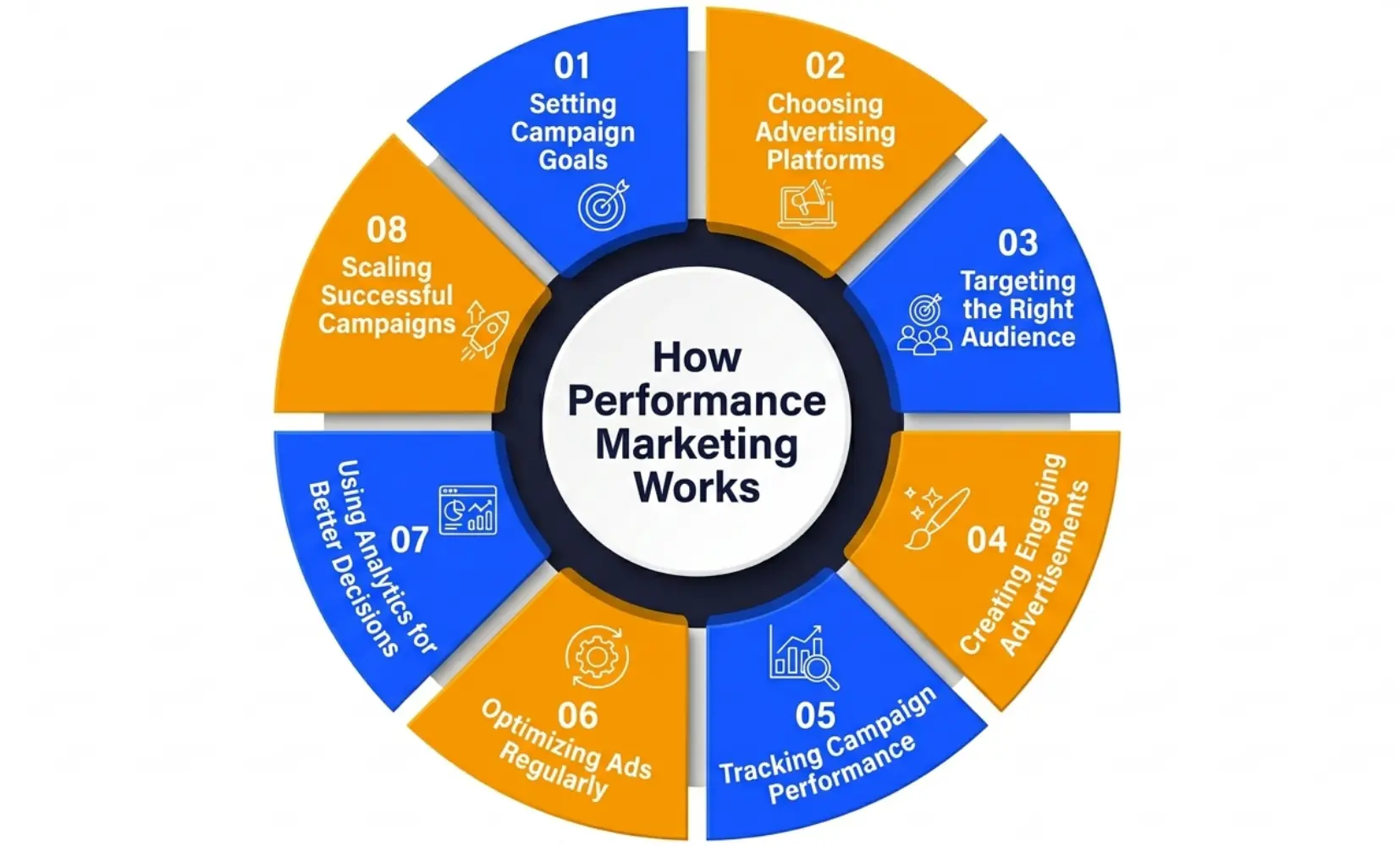
1. Setting Campaign Goals
Businesses first decide clear objectives like generating leads, increasing website traffic, boosting sales, or improving app downloads through targeted digital advertising campaigns.
2. Choosing Advertising Platforms
Marketers select platforms like Google Ads, Facebook Ads, Instagram, LinkedIn, or YouTube based on audience behavior, campaign goals, and business requirements.
3. Targeting the Right Audience
Performance marketing uses demographics, interests, search intent, and retargeting techniques to reach people who are most likely to engage or convert.
4. Creating Engaging Advertisements
High-performing ads include strong headlines, attractive visuals, persuasive copy, and clear call-to-actions that encourage users to click or purchase products.
5. Tracking Campaign Performance
Marketers monitor metrics like CTR, CPC, CPA, conversions, and ROAS using analytics tools to measure campaign success and audience engagement accurately.
6. Optimizing Ads Regularly
Campaigns are continuously improved through A/B testing, budget adjustments, audience refinement, and creative optimization to achieve better performance and lower costs.
7. Using Analytics for Better Decisions
Analytics tools help marketers understand user behavior, identify profitable campaigns, and improve future strategies. This is essential to learn performance marketing effectively.
8. Scaling Successful Campaigns
Once campaigns generate positive results, businesses increase budgets, expand audience targeting, and test new strategies for higher growth and better revenue generation.
If you want to know how to learn performance marketing, start by understanding campaign structure, practicing with ad platforms, and analyzing real campaign data consistently.